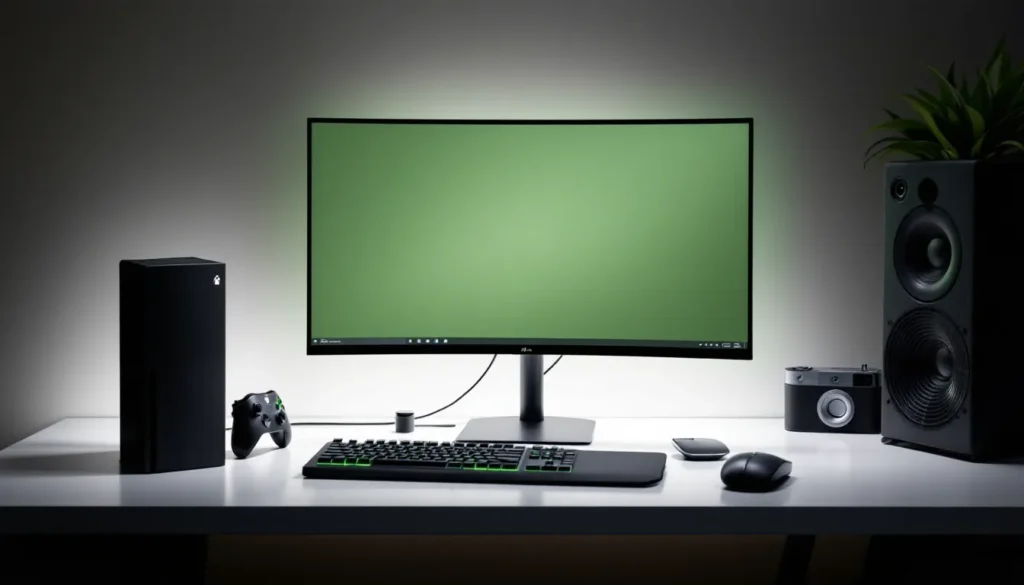
When the Xbox One X dropped in November 2017, Microsoft flexed hard with a bold claim: the world’s most powerful console. At the heart of that power sat a custom AMD GPU capable of pushing 6 teraflops of compute performance, built specifically to tackle native 4K gaming. But for PC gamers and hardware enthusiasts trying to gauge where this console sits in the graphics card hierarchy, the question remains tricky.
Understanding the Xbox One X GPU equivalent isn’t as simple as matching teraflop counts or looking at spec sheets. Console architecture works differently than discrete PC graphics cards, with shared memory pools, fixed platforms, and developer optimizations that can punch above their weight class, or sometimes fall short. Whether you’re weighing a used console purchase, planning a PC build with similar performance, or just curious how a mid-gen refresh from 2017 holds up in 2026, this breakdown cuts through the marketing and delivers the real-world performance comparisons you need.
Table of Contents
ToggleKey Takeaways
- The Xbox One X GPU equivalent is the AMD Radeon RX 580, both sharing the Polaris architecture with comparable 6 TFLOPS performance, though the console’s optimized ecosystem often delivers superior 4K results.
- The Xbox One X achieved native 4K gaming at 30-60fps through developer optimization and unified memory architecture with 326 GB/s bandwidth—advantages that discrete PC cards like the RX 580 (256 GB/s) struggle to match without higher performance tiers.
- Direct GPU comparisons between console and PC hardware are complicated due to fixed console optimization versus PC flexibility; a Polaris-based console GPU punches above its weight in closed environments but requires higher TFLOPS on desktop for equivalent real-world performance.
- In 2026, the NVIDIA GTX 1070 offers 10-20% better performance than Xbox One X at the cost of higher power consumption, while the GTX 1060 falls noticeably short—especially in 4K scenarios—making the RX 580 the most balanced PC equivalent.
- Used Xbox One X systems ($150-$250) represent better 4K value than building a PC with equivalent GPUs ($300-$500+), but PC builds offer upgradeability, higher refresh rates at 1080p/1440p, and greater long-term flexibility.
- Both the Xbox One X and its GPU equivalents are now budget-friendly options for older titles and 1080p/4K30 gaming, outclassed by current-gen consoles with ray tracing, hardware-accelerated features, and RDNA 2 architecture efficiency.
Understanding the Xbox One X GPU Architecture
The Xbox One X, codenamed Project Scorpio during development, packed a significantly upgraded GPU over the original Xbox One and Xbox One S. Microsoft partnered with AMD to create a custom chip based on the Polaris architecture, the same family that powered AMD’s RX 400 and 500 series desktop cards.
Custom AMD Polaris GPU Specifications
The GPU inside the Xbox One X features 40 compute units (CUs) running at 1172 MHz, delivering a total of 6.0 TFLOPS of single-precision floating-point performance. That’s a massive leap from the base Xbox One’s 1.31 TFLOPS.
Here’s the raw spec breakdown:
- Architecture: AMD Polaris (GCN 4th generation)
- Compute Units: 40 CUs
- GPU Clock Speed: 1172 MHz
- Stream Processors: 2560 (64 per CU)
- Memory: 12GB GDDR5 (shared between GPU and system)
- Memory Bandwidth: 326 GB/s
- Memory Bus: 384-bit
The console also features 12GB of GDDR5 memory, though only about 9GB is available for games after the OS reserves its chunk. This shared memory architecture differs fundamentally from PCs, where your GPU has dedicated VRAM and your system RAM operates separately.
TFLOPS Explained: What 6 Teraflops Actually Means for Gaming
Teraflops measure raw compute performance, specifically, how many trillion floating-point operations the GPU can handle per second. It’s a useful benchmark for comparing chips within the same architecture family, but it’s not the whole story.
A GPU with higher TFLOPS isn’t automatically better for gaming. Clock speeds, memory bandwidth, architecture efficiency, driver optimization, and API support all factor into real-world performance. That’s why a 6 TFLOP console GPU doesn’t necessarily match a 6 TFLOP desktop card frame-for-frame.
For the Xbox One X, those 6 teraflops were enough to hit native 4K in many titles, Forza Motorsport 7 ran at 4K/60fps, while Red Dead Redemption 2 targeted 4K/30fps with impressive visual fidelity. The fixed hardware and developer optimization allowed Microsoft’s console to extract every ounce of performance from that Polaris chip in ways that desktop equivalents sometimes couldn’t match.
The Closest PC GPU Equivalents to Xbox One X
Pinning down a direct PC equivalent requires looking at architecture, compute performance, and real-world gaming benchmarks. The Xbox One X’s custom Polaris GPU lands somewhere in the mid-range desktop GPU space from 2016-2017.
AMD Radeon RX 580: The Primary Equivalent
The AMD Radeon RX 580 is widely considered the closest match to the Xbox One X GPU. Both share the Polaris architecture, and the specs align remarkably well:
- RX 580 Specs: 36 CUs, 2304 stream processors, up to 1340 MHz boost clock, 6.17 TFLOPS (8GB model)
- Xbox One X GPU: 40 CUs, 2560 stream processors, 1172 MHz, 6.0 TFLOPS
The Xbox One X actually has more compute units than the RX 580, but runs at a lower clock speed. In practice, they deliver similar performance, with the RX 580 sometimes pulling ahead in PC titles that aren’t as optimized, while the Xbox One X’s closed ecosystem lets it compete effectively even though slightly different specs.
The RX 580 launched in April 2017 as a refresh of the RX 480, and it became the go-to 1080p high-refresh and entry-level 1440p card of its generation. Performance in demanding hardware benchmark tests consistently showed the RX 580 8GB trading blows with the console in multi-platform titles.
NVIDIA GTX 1060 and GTX 1070: Alternative Comparisons
On the NVIDIA side, the comparison gets murkier because of architectural differences between Pascal and Polaris, but two cards often enter the conversation:
NVIDIA GeForce GTX 1060 6GB:
- 1280 CUDA cores, 1708 MHz boost clock, ~4.4 TFLOPS
- Generally performs slightly below Xbox One X in 4K scenarios
- Better driver optimization in some PC titles
- Lower power draw and heat output
NVIDIA GeForce GTX 1070:
- 1920 CUDA cores, 1683 MHz boost clock, ~6.5 TFLOPS
- Typically outperforms Xbox One X by 10-20% in comparable settings
- Better suited for high-refresh 1440p gaming
- More expensive than the console at launch
The GTX 1060 sits a tier below the Xbox One X in pure performance, especially at 4K resolutions. The GTX 1070 edges ahead but also launched at a premium price point ($379 MSRP vs. the console’s $499, which included the entire system).
Performance Benchmarks: Xbox One X vs PC GPUs
Raw specs tell part of the story. Frame rates and visual settings in actual games tell the rest.
4K Gaming Performance Comparison
The Xbox One X was engineered specifically for 4K gaming, and it delivered on that promise more consistently than many expected. Here’s how it stacked up against equivalent PC hardware in select titles from the 2017-2019 window:
Forza Motorsport 7 (4K resolution):
- Xbox One X: 4K native, 60fps locked, Ultra settings equivalent
- RX 580 8GB: 4K, 35-45fps on High settings
- GTX 1070: 4K, 50-60fps on Ultra settings
Assassin’s Creed Origins (4K resolution):
- Xbox One X: Checkerboard 4K, ~30fps, High-equivalent settings
- RX 580 8GB: Native 4K, 25-30fps on Medium-High
- GTX 1070: Native 4K, 35-40fps on High
Red Dead Redemption 2 (4K resolution):
- Xbox One X: Native 4K, 30fps, custom optimized settings (mix of Medium-High PC equivalents)
- RX 580 8GB: 4K, 20-25fps on Medium settings
- GTX 1070: 4K, 30-35fps on Medium-High settings
The console’s optimization advantage shows clearly in these numbers. Independent GPU performance analysis from the era confirmed that the Xbox One X often delivered smoother 4K experiences than its spec-equivalent PC counterparts.
Frame Rates and Settings Across Popular Titles
At 1080p and 1440p resolutions, the playing field shifts. PC GPUs can leverage higher frame rates and settings flexibility that consoles can’t match:
1080p Performance (High/Ultra settings):
- Xbox One X: Generally locked at 60fps in games with performance modes (Gears 5, Call of Duty titles)
- RX 580: 60-80fps in most AAA titles
- GTX 1070: 80-100fps+ in most AAA titles
1440p Performance (High settings):
- Xbox One X: Supersampled from 4K or native 1440p at 60fps (title-dependent)
- RX 580: 45-60fps in demanding titles
- GTX 1070: 60-75fps in demanding titles
Many used console buyers still seek out the Xbox One X specifically for its 4K capabilities at a budget price point.
Memory Bandwidth and VRAM Considerations
The Xbox One X’s 326 GB/s memory bandwidth crushes both the RX 580 (256 GB/s) and GTX 1060 (192 GB/s), though the GTX 1070’s 256 GB/s gets closer. This bandwidth advantage helps the console push 4K frame buffers and high-resolution textures without choking.
But, that 12GB pool is shared between the GPU and CPU. After OS overhead, games get about 9GB, still more than the RX 580’s 8GB or GTX 1060’s 6GB of dedicated VRAM, but the shared nature means the CPU and GPU compete for that resource.
Why Direct GPU Comparisons Are Complicated
Comparing console GPUs to discrete PC cards isn’t apples-to-apples. The architectures, software stacks, and optimization strategies differ fundamentally.
Console Optimization vs PC Flexibility
Console developers code to a single, fixed hardware spec. They know exactly how many CUs they have, the exact memory configuration, and the precise CPU-GPU balance. This lets them squeeze performance that would be impossible on the fragmented PC ecosystem.
For example, Gears 5’s Coalition engine was hand-tuned for the Xbox One X’s specific Polaris configuration. The result: native 4K at 60fps in multiplayer modes with settings that would cripple an RX 580 on PC.
PC gaming offers flexibility, higher refresh rates, ultra-wide resolutions, advanced graphics settings, mod support, and the ability to upgrade individual components. But that comes at the cost of less optimized code paths for every hardware combination.
Shared vs Dedicated Memory Architecture
The Xbox One X uses unified memory architecture (UMA), where the 12GB GDDR5 pool serves both the CPU and GPU. PC systems use separate pools: dedicated GDDR5/GDDR6 VRAM on the GPU, and DDR4/DDR5 system RAM.
UMA offers advantages:
- No data duplication between system and GPU memory
- Flexible allocation based on game needs (CPU-heavy vs GPU-heavy scenarios)
- Lower latency for shared resources
But it also creates constraints:
- Total memory must accommodate both system and graphics workloads
- Memory bandwidth is shared between CPU and GPU operations
- Less total memory available compared to a PC with 8GB VRAM + 16GB system RAM
This architectural difference means a game might run at 4K on Xbox One X with “9GB available” but struggle on an RX 580 with 8GB VRAM if the PC version requires additional system resources the console doesn’t need.
Xbox One X GPU in 2026: Is It Still Relevant?
Nearly nine years after launch, the Xbox One X occupies an interesting spot in the gaming landscape.
Modern Gaming Demands and Xbox One X Capabilities
Gaming in 2026 has moved well beyond the Xbox One X’s capabilities for cutting-edge experiences. Modern AAA titles like the latest Assassin’s Creed, Starfield, or Cyberpunk 2077: Phantom Liberty were designed with current-gen consoles (PS5, Xbox Series X/S) and mid-to-high-end PC hardware in mind.
Key limitations for modern gaming:
- Ray tracing: The Polaris architecture predates hardware-accelerated ray tracing. Modern titles that rely on RT effects won’t run on Xbox One X, or will fall back to severely compromised versions.
- DirectStorage and asset streaming: Xbox One X uses a mechanical HDD by default (though SSD upgrades help). Games built around PS5/Series X’s SSD streaming tech can’t scale down effectively.
- CPU bottleneck: The Jaguar-based CPU (8 cores at 2.3 GHz) can’t keep up with modern game logic, physics, and AI demands.
- Memory constraints: 9GB for games was forward-thinking in 2017: it’s tight for 2026 titles targeting 4K with high-res textures and complex scenes.
That said, the console still handles its native library exceptionally well. Backward-compatible games run beautifully, and many current Xbox ecosystems still support cross-gen titles at lower settings.
Comparing to Current-Gen Xbox Series Consoles
The Xbox Series S and Series X represent massive leaps over the One X:
Xbox Series S:
- 4 TFLOPS RDNA 2 GPU (more efficient architecture than Polaris)
- Targets 1440p gaming with upscaling to 4K
- Hardware ray tracing support
- Custom NVMe SSD with DirectStorage
- Even though lower TFLOPS, significantly outperforms Xbox One X due to architectural improvements
Xbox Series X:
- 12 TFLOPS RDNA 2 GPU
- Native 4K gaming at 60fps (120fps in select titles)
- Hardware ray tracing, Variable Rate Shading, mesh shaders
- 16GB GDDR6 memory
- Roughly 2-3x real-world performance over Xbox One X
The efficiency gains from RDNA 2 mean the Series S’s “lower” 4 TFLOPS delivers performance closer to the One X’s 6 TFLOPS Polaris chip in many scenarios, while adding features the older console simply can’t do.
Should You Build a PC with an Equivalent GPU?
If you’re weighing whether to grab a used Xbox One X or build a PC with an RX 580 or GTX 1060/1070, context matters.
Price-to-Performance Analysis
In 2026, both the Xbox One X and its GPU equivalents live in the used market. New stock is long gone, so pricing varies wildly based on condition and region.
Used Xbox One X:
- Typical price: $150-$250 (complete system with controller)
- Includes entire gaming system, no additional parts needed
- Access to Xbox Game Pass (if subscribed)
- Limited upgrade path
PC Build with RX 580 or GTX 1060:
- Used RX 580 8GB: $80-$120
- Used GTX 1060 6GB: $90-$130
- Complete budget build (CPU, mobo, RAM, PSU, case, storage): $300-$500 total
- Flexibility to upgrade components over time
- No online subscription required for multiplayer (outside of game-specific subscriptions)
For pure 4K gaming on a budget, the Xbox One X at $200 offers better value than building a comparable PC. You’re getting optimized performance, a compact form factor, and controller included.
If you value flexibility, higher refresh rates at 1080p/1440p, mod support, and upgradeability, the PC route makes more sense, even at a higher upfront cost. According to detailed hardware comparisons, the RX 580 remains a solid 1080p card for esports and older AAA titles in 2026.
Used Market Options and Availability
Finding these components in 2026 requires hunting through used marketplaces, local classifieds, and specialty retailers:
Xbox One X availability:
- Still relatively common on eBay, Facebook Marketplace, and local game shops
- Watch for reliable used console listings with confirmed working condition
- Check for signs of thermal wear or hard drive issues
RX 580 / GTX 1060 availability:
- Plentiful on eBay and hardware swap communities (r/hardwareswap, local forums)
- Many ex-mining cards circulate, check thermal paste condition and run stress tests
- GTX 1060 cards tend to have better longevity due to lower power draw
Risks to watch for:
- Thermal degradation on GPUs (dried paste, worn fans)
- Xbox One X consoles with failing HDDs or thermal shutdowns
- Overpriced sellers banking on nostalgia rather than actual market value
If you already own an Xbox ecosystem with digital game libraries, grabbing a used Xbox One as a secondary 4K machine makes practical sense. For someone building their first gaming setup or upgrading an aging PC, the RX 580 offers better long-term flexibility.
Conclusion
The Xbox One X GPU sits comfortably in the same performance class as the AMD RX 580 and slots between the NVIDIA GTX 1060 and GTX 1070. Its custom Polaris architecture, 6 teraflops of compute, and 12GB of shared GDDR5 memory delivered impressive 4K gaming when it launched in 2017, and that hardware still holds up for its native library in 2026.
Direct comparisons remain tricky due to console optimization, unified memory architecture, and the fundamentally different software stacks between Xbox and PC. The Xbox One X often punched above its weight in 4K scenarios thanks to developer optimization, while equivalent PC GPUs offered more flexibility and higher frame rates at lower resolutions.
In 2026, both the console and its PC equivalents are aging gracefully but clearly outclassed by current-gen hardware. They’ve transitioned from cutting-edge to budget-friendly options for gamers targeting 1080p high-refresh or 4K/30fps experiences in older titles. Whether you chase a used Xbox One X for its plug-and-play 4K value or build around an RX 580 for upgradeability and flexibility depends entirely on your gaming priorities, library, and budget constraints.