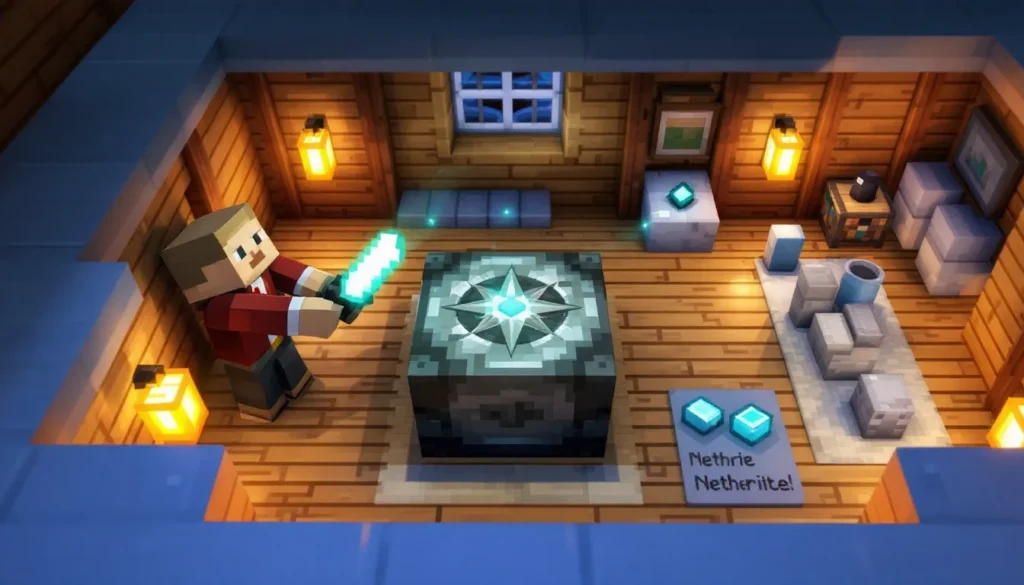

The Silence armor trim is one of Minecraft’s rarest cosmetic upgrades, hidden deep within the game’s most dangerous biome. Introduced in the 1.19 Wild Update alongside the Deep Dark and Ancient Cities, this trim represents more than just aesthetic customization, it’s a badge of honor proving a player survived one of the toughest environments in the game. Unlike most armor trims scattered across various structures, the Silence trim is exclusive to Ancient City loot, making it both coveted and challenging to obtain.
For players building complete trim collections or simply wanting unique armor designs, understanding how to locate, apply, and duplicate the Silence armor trim is essential. This guide covers everything from navigating the pitch-black corridors of Ancient Cities without waking the Warden, to selecting the perfect material combinations that make this trim stand out. Whether you’re a seasoned explorer or preparing for your first Deep Dark expedition, here’s what you need to know about the minecraft silence armor trim.
Table of Contents
ToggleKey Takeaways
- The Silence armor trim in Minecraft is an exclusive cosmetic upgrade found only in Ancient City loot chests, making it one of the game’s rarest and most coveted decorative items.
- Successfully obtaining the Silence armor trim requires mastering stealth mechanics like constant sneaking, wool placement around sculk sensors, and avoiding the Warden at all costs.
- Apply the Silence trim at a Smithing Table using the template, any armor piece, and a material ingot to create distinctive geometric patterns, with top combinations including Netherite Armor + Diamond Trim for maximum visual impact.
- Duplicate Silence armor trim templates using 7 diamonds and 1 deepslate block per duplication, allowing full armor sets to be trimmed without repeated dangerous Ancient City expeditions.
- Ancient Cities spawn beneath mountainous terrain between Y-levels -52 and -20, approximately every 5,000-7,000 blocks, and contain 12-16 loot chests with an 8.3% Silence trim drop rate per chest.
What Is the Silence Armor Trim in Minecraft?
The Silence armor trim is a smithing template item used to apply decorative patterns to any piece of armor in Minecraft. Added in version 1.20 (the Trails & Tales update, which expanded on the armor trim system introduced in 1.19.4), this trim features a distinctive geometric design that evokes the eerie architecture of Ancient Cities.
When applied to armor, the silence trim minecraft creates symmetrical patterns along the edges and surfaces of helmets, chestplates, leggings, and boots. The design includes angular lines and border accents that complement the dark, mysterious aesthetic of Deep Dark structures. Unlike functional armor upgrades, trims are purely cosmetic, they don’t provide defense bonuses, enchantment effects, or gameplay advantages.
What makes the Silence trim special is its exclusivity. Players can only find it in Ancient City chests, which means accessing it requires venturing below Y-level -30 into the Deep Dark biome and successfully looting one of Minecraft’s most treacherous locations. The trim’s name references the core survival mechanic of Ancient Cities: staying silent to avoid triggering sculk sensors and spawning the Warden.
Once obtained, the Silence armor trim smithing template can be duplicated infinitely using a crafting recipe, but that first template demands serious exploration effort. For collectors aiming to gather all 16 armor trims in the game (as of Minecraft 1.20.4), the Silence trim represents one of the more dangerous acquisitions alongside the Ward trim from the same biome.
Where to Find the Silence Armor Trim
Locating Ancient Cities in the Deep Dark
Ancient Cities generate exclusively in the Deep Dark biome, which appears beneath mountainous terrain at Y-levels between -52 and -20. These cities don’t spawn under every Deep Dark, the biome must be large enough to accommodate the massive structure, which can span several hundred blocks.
To locate an Ancient City efficiently, players should:
- Explore mountain biomes and their surrounding areas, as Deep Dark most commonly generates beneath peaks, groves, and snowy slopes
- Listen for the distinct ambient sounds that play when entering Deep Dark, low, ominous tones signal proximity
- Watch for sculk blocks spreading across cave floors, which indicate Deep Dark territory
- Use the /locate structure ancient_city command in Java Edition (or /locate structure minecraft:ancient_city in Bedrock Edition) if playing with cheats enabled
Ancient Cities are rare. According to community mapping projects, they generate approximately every 5,000-7,000 blocks in appropriate biomes, making systematic exploration or the locate command far more practical than random cave diving.
Navigating Ancient City Structures Safely
Ancient Cities are labyrinthine structures built from deepslate, basalt, and sculk blocks. Their architecture includes multi-level corridors, central plazas, frame structures that resemble portals, and numerous loot chambers. The entire city is blanketed in sculk sensors and shriekers, creating a network of sound-triggered traps.
Safe navigation requires understanding the threat mechanics:
Sculk sensors detect vibrations from footsteps, block breaking, item dropping, and most player actions within an 8-block radius. When triggered, they activate nearby sculk shriekers.
Sculk shriekers apply the Darkness effect (drastically reducing visibility) and track “warning levels.” After three activations within 10 minutes, a fourth trigger spawns the Warden, a hostile mob with 500 health points and attacks dealing up to 45 damage (22.5 hearts) on Hard difficulty.
The Warden cannot be reasonably defeated in combat. It has more health than the Ender Dragon and hits harder than any mob in vanilla Minecraft. Avoidance is the only practical strategy.
To move through Ancient Cities without spawning the Warden:
- Crouch-walk constantly, sneaking prevents sculk sensors from detecting footsteps
- Break wool blocks found throughout the city to create sound-dampening paths, as wool prevents vibration transmission
- Avoid jumping, sprinting, or breaking non-wool blocks unless absolutely necessary
- Carry a water bucket for emergency escapes, Wardens are slow swimmers
- Place wool between yourself and sculk sensors before performing loud actions like opening chests or breaking blocks
Loot Chest Locations and Drop Rates
Ancient Cities contain multiple chest types with different loot tables. The Silence armor trim appears exclusively in standard Ancient City chests, not in the special ice box chests or redstone-trapped chambers.
These chests generate in:
- Corridor alcoves along the city’s pathways
- Structure wings extending from the central plaza
- Tower-like buildings in the city’s outer sections
- Underground chambers beneath the main level
A typical Ancient City contains 12-16 loot chests scattered throughout the structure. The Silence armor trim has approximately a 8.3% drop chance per chest according to game files, meaning players typically need to loot 10-15 chests to find one template. This matches drop rate analyses from the community.
Because of the low individual drop rate and high danger level, many players opt to loot multiple Ancient Cities rather than risk extensive time in a single location. The abundance of chests means thorough exploration of one large city usually yields at least one Silence trim, but RNG can be brutal.
How to Apply the Silence Armor Trim to Your Armor
Required Materials and Crafting Setup
Applying armor trims uses the Smithing Table, not a standard crafting table or anvil. Players need three components:
- Silence Armor Trim Smithing Template (the item found in Ancient City chests)
- One piece of armor (helmet, chestplate, leggings, or boots, any material)
- One material ingot/gem to determine the trim’s color:
- Iron Ingot
- Gold Ingot
- Diamond
- Netherite Ingot
- Emerald
- Copper Ingot
- Amethyst Shard
- Lapis Lazuli
- Redstone Dust
- Quartz
The armor’s base material (leather, chainmail, iron, gold, diamond, or netherite) and the trim material create different visual combinations. The trim material determines the color of the decorative pattern, not the armor’s functionality.
Important: Applying a trim consumes the smithing template. Players must duplicate the template first if they want to use it on multiple armor pieces (covered in a later section).
Step-by-Step Application Process
The application process is straightforward:
- Place the Smithing Table in your base or a safe location (Ancient Cities are not recommended for this task)
- Open the Smithing Table interface, it displays three slots in version 1.20+
- Insert the Silence Armor Trim Smithing Template in the leftmost slot (marked with a trim icon)
- Place your chosen armor piece in the center slot
- Add your material (ingot, gem, or dust) in the rightmost slot
- Collect the trimmed armor from the output slot
The armor retains all enchantments, durability, and modifications when trimmed. Applying a trim doesn’t reset enchantments or damage the item. But, armor can only hold one trim at a time, applying a new trim overwrites the previous pattern.
Players can apply different trims to different armor pieces (for example, Silence trim on the helmet, Ward trim on the chestplate) to create custom combinations. The trim color can also vary between pieces depending on the materials used during application.
Best Material Colors and Customization Options
Top Material Combinations for Stunning Designs
The visual impact of the Silence trim depends heavily on the material pairing. The trim pattern appears as a contrasting color against the armor’s base material, creating either subtle accents or bold statements.
Top material combinations by armor type:
Diamond Armor + Netherite Trim
Creates a dark, almost black trim pattern on bright cyan diamond armor. This high-contrast look emphasizes the geometric Silence pattern and works well for endgame players who want intimidating aesthetics.
Netherite Armor + Diamond Trim
Reverses the above, bright cyan patterns on dark gray netherite. The diamond trim “pops” dramatically and is one of the most popular combinations according to player showcase compilations.
Gold Armor + Amethyst Trim
Produces purple accents on golden armor. The warm-cool color contrast creates a regal, mythical appearance that stands out in multiplayer environments.
Leather Armor + Emerald Trim
Green trim on brown leather offers a natural, ranger-like aesthetic. Since leather armor can be dyed any color, combining custom dye colors with emerald Silence trim opens enormous customization possibilities.
Iron Armor + Copper Trim
Subtle orange-brown trim on gray iron creates a weathered, veteran warrior look. The low contrast makes this combination understated but detailed.
Chainmail Armor + Lapis Lazuli Trim
Deep blue trim on semi-transparent chainmail produces a spectral, almost ghostly effect. Chainmail’s unique appearance makes it ideal for distinctive trim showcases.
Matching Armor Sets with Silence Trim Patterns
For players aiming for cohesive full-set appearances, consistency is key. The Silence trim’s angular, border-heavy design complements certain aesthetics better than others.
Monochrome sets work exceptionally well with Silence trim. Using the same material for both armor and trim color (like diamond armor with diamond trim) creates tone-on-tone patterns visible mainly through texture variation. This subtle approach appeals to players who want customization without flashiness.
High-contrast sets maximize visibility. Pairing light armor with dark trim materials (or vice versa) makes the Silence pattern the focal point of the armor’s appearance. Netherite and diamond combinations dominate this category.
Thematic sets align trim materials with specific builds or playstyles:
- Ancient explorer: Netherite armor + amethyst trim (purple echoes the Deep Dark’s aesthetic)
- Royal guard: Gold armor + diamond trim (opulent and ceremonial)
- Stealthy operative: Iron armor + black dye leather + netherite trim (dark, low-profile)
- Nature guardian: Dyed green leather armor + emerald trim (forest camouflage)
Mixed trim sets apply different trims to different armor pieces. Combining Silence trim with complementary trims like Ward (also from Ancient Cities) or Vex (from Woodland Mansions) creates unique hybrid appearances. For example, Silence trim on helmet and boots with Ward trim on chestplate and leggings produces symmetrical pattern variation.
Remember that trim visibility varies by armor piece. Helmets and chestplates display trim patterns most prominently, while boots show the least detail. Players prioritizing visual impact should focus trim material selection on upper armor pieces.
Tips for Surviving Ancient Cities While Hunting for Silence Trim
Avoiding Sculk Sensors and the Warden
The Warden is Minecraft’s most dangerous mob by design, developers intended it as an avoidable threat rather than a boss fight. Surviving Ancient City exploration means mastering stealth mechanics and understanding sculk behavior.
Vibration rules:
Sculk sensors detect specific vibration frequencies. Actions that trigger sensors include:
- Walking, running, or jumping (sneaking prevents this)
- Breaking or placing blocks
- Opening chests or doors
- Throwing items
- Eating food
- Using projectiles (arrows, tridents)
- Swimming or riding boats
Actions that DON’T trigger sensors:
- Sneaking at any speed
- Standing still
- Looking around (camera movement)
- Inventory management (while sneaking)
- Eating while sneaking (as of 1.19.4)
Wool mechanics:
Wool blocks and carpets completely block vibration transmission. Placing wool between a vibration source and a sculk sensor prevents detection even if the player performs loud actions. This allows for:
- Creating safe zones around chests by surrounding them with wool
- Building wool pathways through sensor-dense areas
- Placing wool “shields” between the player and shriekers before making noise
Ancient Cities generate with wool scattered throughout, but it’s never enough. Bringing 2-3 shulker boxes of wool (or several stacks if shulker boxes aren’t available) transforms exploration from constant danger to manageable stealth.
Shrieker management:
Naturally generated sculk shriekers in Ancient Cities can summon Wardens. Player-placed shriekers (mined with Silk Touch) cannot. If a shrieker is blocking a critical path:
- Surround it with wool to block incoming vibrations
- Break it quickly (use an efficiency-enchanted hoe, which is fastest)
- Immediately retreat, breaking shriekers causes vibrations that trigger other sensors
Darkness effect countermeasures:
When shriekers activate, they apply the Darkness effect for 12 seconds. This radically reduces visibility range to about 4-5 blocks and creates a pulsing vignette effect. Countermeasures:
- Night Vision potions partially counteract Darkness but don’t eliminate it
- Torches and light sources help minimally, Darkness overrides most lighting
- Sound navigation becomes critical: listen for footsteps to track Warden proximity
- Mark your path with distinctive blocks (like glowstone or sea lanterns) to maintain orientation
Essential Gear and Preparation Strategies
Proper preparation dramatically increases Ancient City survival rates. Recommended loadout:
Armor and weapons:
- Full enchanted armor (at minimum Protection IV iron: diamond or netherite preferred)
- Sword with Sharpness V (for emergency Warden encounters, running is still better)
- Bow with Power V and Infinity (ranged mob clearing from safe distance)
Tools:
- Efficiency V pickaxe (faster block breaking = less time making noise)
- Silk Touch pickaxe (optional, for collecting sculk blocks and shriekers)
- Shears or hoe (fastest wool harvesting)
Consumables:
- Golden apples (8-16, for emergency healing)
- Night Vision potions (8-minute durations, bring 3-4)
- Slow Falling potions (Ancient Cities have vertical drops: falling triggers sensors)
- Food with high saturation (golden carrots or steak)
Utility items:
- 3-5 stacks of wool (white wool works: any color functions identically)
- Ender chest (secure storage for found loot in case of death)
- Water buckets (2-3, for emergency Warden escapes and fall prevention)
- Scaffolding or ladders (vertical movement without fall sounds)
- Torches (at least 64, Ancient Cities are pitch black)
Pre-exploration strategies:
Set a respawn point nearby. Place a bed in a safe cave chamber near the Ancient City but outside the Deep Dark biome. This minimizes recovery time if death occurs.
Clear surface mobs first. Ancient Cities occasionally spawn regular hostile mobs. Clear these before starting stealth exploration to avoid unexpected combat triggering sensors.
Map the city perimeter. Before entering loot chambers, do a sneaking reconnaissance lap around the city’s edges. Identify chest locations, shrieker positions, and safe retreat routes.
Establish a wool bridge network. Invest 15-20 minutes placing wool pathways to high-value loot areas. This upfront time cost pays off in safe, rapid loot collection.
Carry Ender Pearls. In worst-case Warden scenarios, ender pearls allow instant 40-block teleportation. They trigger sensors, but survival matters more than stealth once the Warden spawns.
Duplicating Silence Armor Trims for Your Collection
Since applying an armor trim consumes the smithing template, players need duplicates to trim multiple armor pieces. Fortunately, Minecraft includes a duplication recipe for all smithing templates.
Duplication recipe for Silence Armor Trim:
- 1 Silence Armor Trim Smithing Template (the original)
- 7 Diamonds
- 1 Deepslate block (any deepslate variant: cobbled, polished, bricks, or tiles)
Arrange these in a crafting table or the crafting grid:
- Place the Silence Armor Trim template in the center slot
- Surround it with 7 diamonds in the remaining slots (top row, left and right middle slots, bottom row)
- Place 1 deepslate block in the middle-left slot
This produces 2 Silence Armor Trim Smithing Templates, the original returns plus one duplicate. The recipe can be repeated infinitely as long as players have diamonds and deepslate.
Resource efficiency notes:
Duplicating four templates (enough for a full armor set) requires:
- 1 original template (from Ancient City)
- 21 diamonds total (7 per duplication × 3 duplications)
- 3 deepslate blocks
Diamonds are the limiting factor. Players should ensure they have stable diamond supplies (Y-level -59 mining or End City looting) before committing to full-set trimming.
Deepslate sourcing:
Deepslate generates abundantly at Y-levels 0 to -64. Ancient Cities themselves provide hundreds of deepslate blocks, making it convenient to gather deepslate during the same expedition where the Silence trim is found.
Storage and organization:
Once duplicated, smithing templates stack to 64. Players building comprehensive trim collections should dedicate storage space to templates. A single chest can hold all 16 unique trim types with room for duplicates.
Trading considerations:
In multiplayer environments, duplicated Silence trims become valuable trade goods. Because the template requires dangerous exploration to obtain initially, players who successfully loot Ancient Cities can trade duplicates to less-experienced players in exchange for diamonds, netherite, or other rare resources.
Comparing Silence Trim to Other Ancient City Armor Trims
Ancient Cities contain two unique armor trim types: Silence and Ward. Both appear in the same loot pool with identical rarity, making them equally difficult to obtain.
Visual differences:
The Silence trim features angular, border-focused patterns that run along armor edges and create geometric accents on flat surfaces. The design emphasizes symmetry and sharp lines, giving armor a structured, architectural appearance.
The Ward trim uses more organic, flowing patterns with curved elements and central focal points. Its design language evokes protection and shielding rather than structure.
When applied to the same armor piece with identical materials, Silence trim appears more minimalist and edge-defined, while Ward trim creates fuller coverage with more intricate central details.
Design philosophy:
Both trims reflect Ancient City themes:
- Silence represents the stealth requirement, its clean lines mirror the discipline needed to navigate without triggering sensors
- Ward represents protection against the Warden, its shield-like patterns emphasize defense
Popularity and usage:
Community showcases suggest roughly equal popularity between the two trims. Silence trim tends to appear more frequently in:
- Minimalist builds
- Modern or futuristic base aesthetics
- PvP-focused server armor (angular designs perceived as “competitive”)
Ward trim dominates:
- Fantasy/medieval builds
- Tank or defensive role-play characters
- Armor sets emphasizing ornate decoration over clean lines
Collection completeness:
For players pursuing complete trim collections, finding both Silence and Ward requires looting multiple Ancient City chests. The 8.3% drop rate per trim means each has roughly a 16.6% chance combined that a chest contains either template. Statistically, looting 8-10 chests should yield at least one of each, though RNG variance can require more.
Duplication resource comparison:
Both Silence and Ward trims use the same duplication recipe (7 diamonds + 1 deepslate), making them equally expensive to replicate. This parity means players don’t need to prioritize finding one trim over the other based on material efficiency.
Other trim comparison:
Compared to trims from other structures:
- Silence/Ward vs. Desert Temple trims (Dune): Ancient City trims are significantly rarer due to structure scarcity and danger
- Silence/Ward vs. Stronghold trims (Eye): Similar difficulty level: Strongholds are easier to find but require multiple End Portal frame searches
- Silence/Ward vs. Bastion trims (Snout, Rib): Comparable danger level but Bastions offer multiple trim types in one structure
The Silence trim ranks among the top three most challenging trims to obtain, alongside Ward (same location) and Spire (End City ships). For dedicated collectors, Ancient City exploration represents a mandatory but high-risk checkpoint in the completion journey.
Conclusion
The Silence armor trim stands as one of Minecraft’s premier cosmetic achievements, proof that a player successfully navigated the Deep Dark’s lethal environment and lived to tell the tale. Its angular design and Ancient City exclusivity make it a prized addition to any armor collection, whether displayed in a full matched set or combined creatively with other trim types.
Successfully obtaining the trim requires careful preparation, patient stealth, and a solid understanding of sculk mechanics. Players who master wool placement, maintain constant sneaking discipline, and bring proper gear can minimize risk while maximizing loot efficiency. Once the first template is secured, the duplication system ensures that full armor sets and future projects remain accessible without repeated Deep Dark expeditions.
For those still planning their first Ancient City raid, remember: the Warden is designed to be avoided, not defeated. Prioritize silence over speed, preparation over improvisation, and strategic retreat over heroic stands. With the right approach, the Silence armor trim becomes a realistic goal rather than an impossible challenge, and a striking visual centerpiece for endgame armor customization.