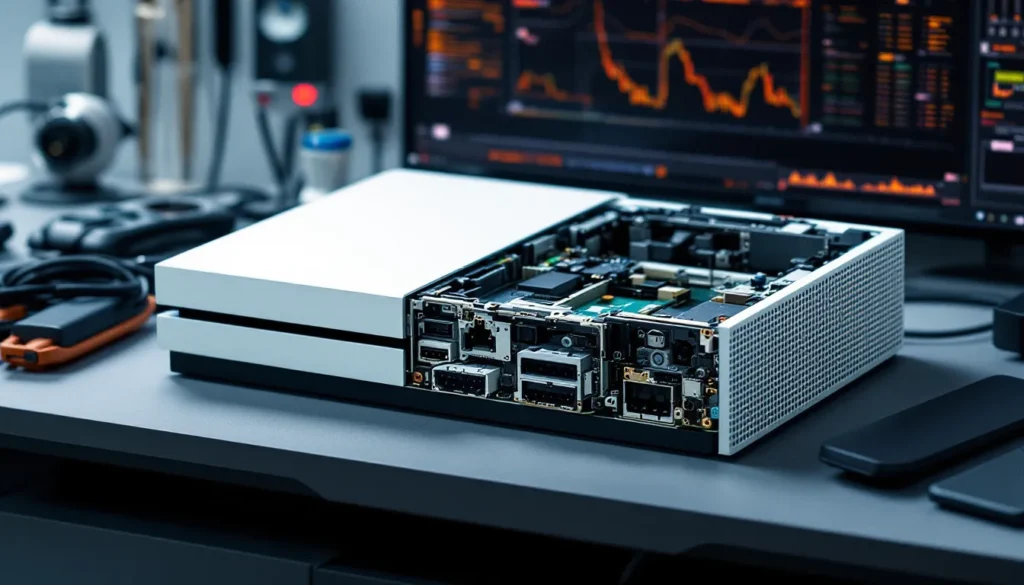
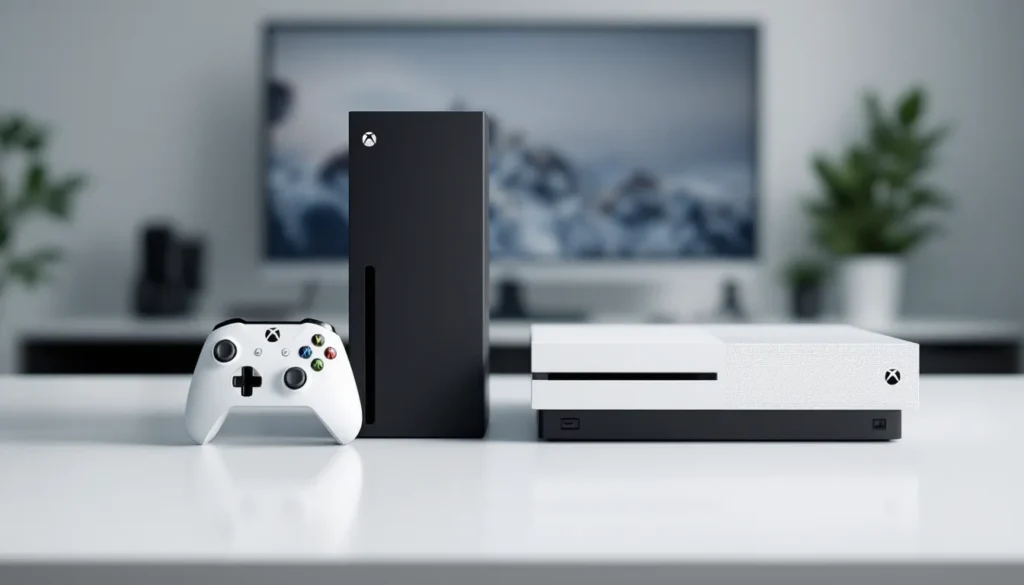
Two consoles from different generations, both sitting on store shelves at similar price points. If you’re hunting for an Xbox in 2026 and spot a used Xbox One X next to a brand-new Series S, the choice isn’t as obvious as you’d think. The One X was Microsoft’s 4K powerhouse back in 2017, while the Series S launched in 2020 as the budget gateway to next-gen gaming. But here’s the catch: newer doesn’t always mean better, especially when comparing the more affordable current-gen console against last gen’s premium model.
This comparison gets even messier when you factor in the Xbox One S vs Xbox Series S debate, or the broader Xbox One vs Xbox Series S question. Each console brings a different strength to the table, raw GPU grunt, lightning-fast storage, backward compatibility, or physical media support. By the end of this breakdown, you’ll know exactly which console fits your gaming needs, budget, and what kind of performance you can realistically expect from each in 2026.
Table of Contents
ToggleKey Takeaways
- The Xbox Series S outperforms the Xbox One X in CPU power, frame rates, and load times, making it the superior choice for new game releases and modern gaming experiences.
- The Xbox One X delivers higher native 4K resolution and includes a 4K UHD Blu-ray drive, but its game library stopped growing in 2022 and receives no developer optimization.
- The Series S’s NVMe SSD loads games 40-50x faster than the One X’s mechanical drive, with full load times dropping from 45-90 seconds to just 8-15 seconds.
- Only the Xbox Series S supports hardware-accelerated ray tracing and next-gen visual features like Variable Rate Shading, essential for modern game engines and visual fidelity.
- At $249 on sale with Game Pass access and guaranteed support through 2030, the Series S provides significantly better long-term value than a used One X console priced around $200.
Understanding the Two Consoles: Generations Apart
Xbox Series S Overview
The Xbox Series S launched in November 2020 as Microsoft’s entry-level ninth-generation console. It’s built around a custom AMD Zen 2 CPU with 8 cores running at 3.6 GHz (3.4 GHz with SMT enabled) and an RDNA 2 GPU delivering 4 TFLOPS of compute power. The console packs 10GB of GDDR6 RAM (8GB at 224 GB/s, 2GB at 56 GB/s) and a 512GB custom NVMe SSD that runs at 2.4 GB/s raw speed.
It’s an all-digital console, no disc drive, which keeps the price down and the footprint tiny. Microsoft designed it to target 1440p gaming at 60fps, with support for up to 120fps in less demanding titles. The Series S fully supports DirectX 12 Ultimate features including hardware-accelerated ray tracing, Variable Rate Shading (VRS), and mesh shaders.
Xbox One X Overview
The Xbox One X hit shelves in November 2017 as the most powerful console of the eighth generation. Under the hood sits a custom AMD Jaguar CPU with 8 cores clocked at 2.3 GHz and a Polaris-based GPU pushing 6 TFLOPS. It features 12GB of GDDR5 RAM on a 384-bit memory bus delivering 326 GB/s bandwidth, paired with a 1TB mechanical hard drive spinning at 5400 RPM.
This was Microsoft’s answer to 4K gaming on consoles, designed to run Xbox One titles at native or checkerboard 4K resolution. The One X includes a 4K UHD Blu-ray drive, making it a capable media hub. But, it lacks the architectural advantages of next-gen consoles, no hardware ray tracing, no DirectStorage, and no Velocity Architecture.
Performance and Hardware Comparison
CPU and GPU Power
The CPU battle is a knockout. The Series S’s Zen 2 architecture at 3.6 GHz absolutely demolishes the One X’s aging Jaguar cores at 2.3 GHz. We’re talking about a roughly 3.5x advantage in CPU performance, which translates directly to better physics simulation, AI behavior, and frame time consistency. In titles like Cyberpunk 2077 or Starfield, the One X’s CPU chokes in crowded areas where the Series S maintains stable performance.
GPU comparison gets trickier. On paper, the One X’s 6 TFLOPS beats the Series S’s 4 TFLOPS. But raw TFLOPS from different architectures don’t compare directly, it’s like comparing a V8 engine from 2017 to a turbo-4 from 2020. The Series S’s RDNA 2 architecture is significantly more efficient per compute unit. Features like VRS let developers allocate GPU resources more intelligently, and when discussing console optimization techniques, the Series S’s modern architecture consistently punches above its teraflop count.
In practice, the One X pushes more pixels, but the Series S renders each frame more efficiently with better effects.
RAM and Memory Architecture
The One X takes this category. Its 12GB of GDDR5 versus the Series S’s 10GB of GDDR6 (with only 8GB running at full speed) gives last-gen’s flagship more breathing room for high-resolution textures and assets. Games targeting native 4K benefit from that extra memory buffer, especially open-world titles with massive texture streaming demands.
But, the Series S’s faster memory speed (224 GB/s on the fast portion) partially offsets the capacity disadvantage. Plus, the Series S’s unified memory architecture integrates better with its SSD through Velocity Architecture, allowing it to stream assets on-demand rather than keeping everything in RAM.
For backward-compatible Xbox One games, the extra RAM on the One X sometimes enables higher-quality settings or better texture filtering.
Storage Speed and Capacity
No contest here, the Series S’s custom NVMe SSD is a generation-defining upgrade. At 2.4 GB/s raw (4.8 GB/s compressed with hardware decompression), it’s roughly 40-50x faster than the One X’s mechanical drive. This isn’t just about load times: it fundamentally changes how games are built.
The One X’s 1TB HDD takes 45-90 seconds to load most AAA titles. The Series S loads the same games in 8-15 seconds. Games like Forza Horizon 5 or Microsoft Flight Simulator leverage DirectStorage on Series S to stream massive worlds without stuttering, something impossible on mechanical storage.
The 512GB capacity on the Series S is limiting, though. After system reserves, you get around 364GB of usable space. Modern games like Call of Duty can eat 150GB alone. The One X’s 1TB gives more breathing room, but you’ll spend that saved capacity waiting through load screens.
Graphics and Visual Performance
Resolution Capabilities
This is where the Xbox One X vs Series S debate gets spicy. The One X was built for native 4K gaming on Xbox One titles, and it delivers. Games like Red Dead Redemption 2, Gears 5, and Forza Motorsport 7 run at full 2160p on the One X, often with enhanced textures.
The Series S targets 1440p for Series X
|
S optimized titles, sometimes using dynamic resolution scaling that can drop to 1080p in demanding scenes. For Xbox One backward-compatible games, the Series S typically runs at Xbox One S resolution (1080p or lower) unless the game received a specific Series S enhancement patch.
If you’re gaming on a 4K TV and pixel count matters to you, the One X delivers sharper native resolution in last-gen titles. But if you’re on a 1080p or 1440p display, the Series S’s upscaling is clean, and you won’t notice the difference.
Frame Rates and Refresh Rates
The Series S dominates here. Its stronger CPU enables 60fps as a baseline for most games, with many titles offering 120fps modes in less demanding scenarios. Games like Halo Infinite, Ori and the Will of the Wisps, and Rocket League hit 120fps on Series S when connected to a compatible display.
The One X typically maxed out at 30fps in demanding titles or 60fps in less intensive games. Its Jaguar CPU becomes the bottleneck, the GPU could theoretically push more frames, but the CPU can’t keep up. When comparing the Xbox One S vs Xbox Series S or even the broader Xbox One S vs Series S performance, the next-gen console’s frame rate advantage becomes the deciding factor for competitive players.
Frame time consistency also favors the Series S. Even when both consoles hit 30fps, the Series S maintains tighter frame pacing.
Ray Tracing and Next-Gen Visual Features
Only the Series S supports hardware-accelerated ray tracing. Games like Minecraft with ray tracing, Forza Motorsport (2023), and Cyberpunk 2077 showcase realistic reflections, global illumination, and shadows that the One X can’t replicate. The visual difference is immediately noticeable in games that carry out RT well.
The Series S also supports Variable Rate Shading (VRS), which lets developers allocate GPU power more efficiently, and DirectX 12 Ultimate features like mesh shaders and Sampler Feedback Streaming. These aren’t just buzzwords, they enable better visual effects and performance simultaneously.
The One X’s DirectX 11-class features look great for 2017, but it lacks the rendering techniques modern engines are built around. As more developers optimize for current-gen hardware, that gap widens.
Loading Times and Gaming Experience
This category single-handedly transforms the daily gaming experience. The Series S’s NVMe SSD loads Assassin’s Creed Valhalla in about 12 seconds from the dashboard. The One X takes nearly 90 seconds for the same task. Fast travel in open-world games goes from 20-30 seconds on One X to 3-5 seconds on Series S.
Quick Resume on the Series S lets you suspend up to four games in memory and switch between them in under 5 seconds. You can bounce from Halo Infinite multiplayer to Starfield to Sea of Thieves without seeing a loading screen. The One X doesn’t have this feature at all, every game switch requires closing and relaunching titles.
In 2026, most first-party Xbox titles and many third-party AAA games are optimized specifically for the Series X
|
S’s storage architecture. Games like Starfield and Forza Motorsport use DirectStorage to stream massive amounts of data, eliminating traditional loading screens entirely. These experiences can’t be properly replicated on mechanical storage, even with the One X’s extra GPU power.
Players who frequently jump between games or value their time will find the Series S’s speed advantage worth more than resolution bumps. When exploring the latest Xbox exclusive titles, that responsiveness becomes addictive.
Game Library and Backward Compatibility
Exclusive Titles and Next-Gen Games
Here’s the reality: **new first-party Xbox titles only release on Xbox Series X
|
S and PC**. Microsoft stopped developing for Xbox One in late 2022. Games like Starfield, Forza Motorsport (2023), Redfall, and upcoming titles like Fable, Perfect Dark, and Avowed simply don’t run on the One X.
Third-party support for Xbox One is also drying up. Most AAA publishers shifted development exclusively to current-gen hardware by 2024-2025. When comparing what games you can actually play, the compatibility between generations becomes a critical decision point.
The One X can still play its existing library beautifully, thousands of Xbox One, 360, and original Xbox titles. But its library stopped growing two years ago and won’t expand. The Series S accesses that same backward-compatible library plus every current-gen release.
Backward Compatibility Features
Both consoles play backward-compatible Xbox One, Xbox 360, and original Xbox games, but they handle them differently. The Series S uses FPS Boost technology to double or quadruple frame rates in select titles without patches, games locked to 30fps on One X can hit 60fps or even 120fps on Series S.
Auto HDR on the Series S adds HDR color mapping to thousands of older games that never had it, making them look better than they ever did on original hardware. The One X’s enhanced titles look great, but they’re frozen in their 2017-2020 optimization state.
The One X does have an advantage for specific Xbox One X Enhanced titles running in backward compatibility mode, games like Red Dead Redemption 2 or Assassin’s Creed Origins run at higher native resolutions than the Series S achieves. But that advantage only applies to titles that never received Series X
|
S optimization patches.
For most backward-compatible games, the Series S delivers better load times and often better frame rates, while the One X offers higher resolution.
Design, Size, and Physical Features
Console Dimensions and Portability
The Series S is remarkably compact: 10.8″ × 5.9″ × 2.5″ and weighing just 4.25 lbs. It’s the smallest Xbox ever made, easily fitting in a backpack for LAN parties or travel. The minimalist white design with a circular vent pattern looks modern and fits any entertainment setup.
The One X measures 11.8″ × 9.4″ × 2.4″ at 8.4 lbs, nearly twice the weight and significantly bulkier. It’s still relatively compact for a 2017 console but not portable in any practical sense. The black monolithic design looks premium but dated compared to current-gen styling.
For dorm rooms, small apartments, or anyone who frequently moves their console, the Series S’s size advantage is substantial. It generates less heat and runs quieter under load, too.
Disc Drive vs All-Digital
The One X includes a 4K UHD Blu-ray drive, supporting physical games, 4K movies, and legacy media. If you’ve built a collection of physical Xbox games over the years, the One X plays them all natively. It’s also a legitimate home theater component, 4K Blu-ray players typically cost $150-300 standalone.
The Series S is all-digital. No disc drive means you’re locked into the Microsoft Store and Game Pass ecosystem. You can’t borrow games from friends, buy used discs, or sell titles when you’re done. For collectors or budget-conscious gamers who hunt GameStop sales, this is a dealbreaker.
But, the all-digital approach has perks. No disc swapping means faster game switching, and with Game Pass optimization strategies, many players find they never actually need physical media. The Series S’s design philosophy embraces digital distribution as the future, for better or worse.
Price and Value Proposition
In 2026, the Series S retails for $299 new, often dropping to $249 during sales. The One X was discontinued in 2020, so you’re looking at the used market, typically $180-280 depending on condition and included accessories.
At first glance, the used One X seems like the value play, especially if you find one around $200. But factor in the hidden costs. That mechanical HDD will likely need replacement soon (5-7 year lifespan), adding $60-80. No warranty on used hardware. And you’re buying into a dead platform that can’t play new releases.
The Series S at $249 on sale delivers current-gen gaming, a three-year warranty (if new), and access to every Xbox release through 2030 and beyond. Pair it with Game Pass Ultimate ($16.99/month), and you get instant access to hundreds of games including all first-party releases day one. The math favors new hardware with ongoing support.
If you’re buying from platforms like eBay, just know that finding deals on used One X units can be hit-or-miss. Unless you’re specifically hunting for a 4K disc player or have a massive physical game collection, spending $249 on a new Series S provides better long-term value than $200 on a used last-gen console.
Future-Proofing and Longevity
Developer Support and Optimization
Every Xbox and third-party studio optimizes for Series X
|
S in 2026. The development pipeline, engine tools, and QA processes all target current-gen hardware. Games released today are built around the Series S’s SSD, CPU, and RDNA 2 feature set.
The One X receives zero developer attention. No performance patches, no bug fixes specific to that hardware, no optimizations for new titles (because they don’t release on it). When a game like Cyberpunk 2077 gets massive updates or No Man’s Sky adds new features, the One X version is frozen in time.
Microsoft’s first-party studios, 343 Industries, The Coalition, Ninja Theory, Obsidian, all develop exclusively for current-gen. The Series S is guaranteed to receive every major Xbox release through at least 2030, probably longer. The One X’s support window closed in 2022.
Software Updates and Feature Additions
The Series X
|
S platform receives regular system software updates adding features, UI improvements, and performance optimizations. Recent additions include improved Quick Resume capacity, updated Game Pass integration, Discord voice chat, and cloud gaming enhancements.
The One X’s software is essentially in maintenance mode. It gets security patches and critical bug fixes but no major feature additions. New Xbox OS features like the redesigned dashboard, improved party system, and accessibility features often skip last-gen hardware.
Microsoft’s investment in Xbox Cloud Gaming (xCloud) focuses on Series X server blades, not One X. Cloud gaming through Game Pass Ultimate streams Series S-quality games, but you need Series S hardware to access that ecosystem locally.
Buying a One X in 2026 means committing to hardware that was cutting-edge five years ago but won’t receive updates or support moving forward. The Series S is guaranteed relevance through the full console generation.
Who Should Buy Which Console?
Best Use Cases for Xbox Series S
The Series S is the right choice if you:
- Want to play new releases. Everything launching in 2026 and beyond is built for this hardware.
- Value speed over resolution. Load times and Quick Resume transform how you game daily.
- Game on 1080p or 1440p displays. The resolution difference vanishes at these outputs.
- Subscribe to Game Pass. The all-digital design pairs perfectly with Microsoft’s subscription service.
- Prefer competitive multiplayer. Higher frame rates (60-120fps) give you an edge in shooters and fighters.
- Need portability. The tiny form factor makes it travel-friendly.
- Are building a first Xbox collection. Start with hardware that’ll last through 2030.
Players exploring whether they should upgrade their Xbox One setup will find the Series S delivers the most dramatic generational leap in responsiveness and features.
Best Use Cases for Xbox One X
The One X makes sense if you:
- Already own a massive physical game collection. That disc drive has value if you’ve got 50+ Xbox One discs.
- Need a 4K Blu-ray player. The media capabilities offset some of the gaming limitations.
- Game primarily on backward-compatible titles. If you’re replaying Xbox 360 and original Xbox games at 4K, the One X handles them beautifully.
- Have a strict budget under $200. Used One X consoles occasionally hit $180, making them cheaper than Series S.
- Don’t care about new releases. If your backlog consists entirely of pre-2022 games, the One X plays them well.
- Prioritize 4K resolution above all. That native 4K in enhanced titles looks undeniably sharper on large screens.
Be aware that if you’re considering alternatives for Xbox controller accessories or planning for future repair needs, the One X’s discontinued status means parts become scarcer and more expensive over time.
Conclusion
The Series S wins for most gamers in 2026, and it’s not particularly close. New games, faster load times, Quick Resume, higher frame rates, and guaranteed support through the end of the generation make it the smarter investment. Yes, you sacrifice resolution and disc support, but you gain access to everything Xbox will offer for the next four years.
The One X remains a capable machine for backward compatibility and 4K media playback, but it’s a console frozen in 2020. Its library stopped growing, developers stopped optimizing for it, and new features pass it by. Unless you have specific reasons, a massive disc collection, need for 4K Blu-ray, or ultra-tight budget, the One X is a nostalgia purchase rather than a forward-looking investment.
Both consoles have their place. But if you’re asking which console wins in 2026, the answer is the one that’ll still receive new games, updates, and support in 2027, 2028, and beyond. That’s the Series S.