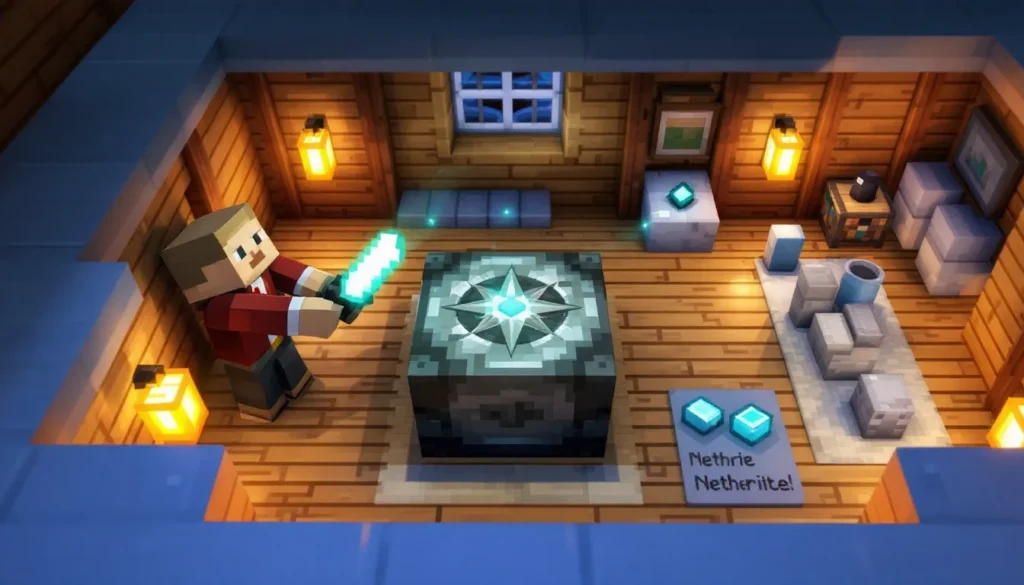

Ancient debris is the single most valuable resource in Minecraft, and if you’ve ever spent hours digging through the Nether only to come up empty-handed, you know how frustrating the hunt can be. This dark, banded block is the only source of netherite, the strongest material in the game, and its rarity makes every piece feel like a trophy. Unlike diamonds, which spawn predictably in the Overworld, ancient debris requires a specific strategy, the right gear, and a solid understanding of Nether generation mechanics.
Whether you’re gearing up for a hardcore run, prepping for PvP, or just want the satisfaction of maxed-out equipment, this guide breaks down everything you need to know about ancient debris in 2026. From spawn mechanics and optimal Y-levels to mining techniques that actually work, this is the resource you’ll want bookmarked before your next Nether expedition.
Table of Contents
ToggleKey Takeaways
- Ancient debris is Minecraft’s rarest and most valuable ore, requiring a diamond or netherite pickaxe to harvest and spawning at a rate of approximately 1.7 blocks per chunk.
- Mine ancient debris at Y-levels 13-17, with Y=15 as the optimal sweet spot, to maximize spawn rates while avoiding dangerous lava lakes below Y=11.
- Bed mining is the fastest and most resource-efficient method for ancient debris farming, using cheap crafted beds that exploit the ore’s blast-resistance.
- A full set of netherite gear requires 80+ ancient debris blocks total, as each piece needs netherite ingots made from four netherite scrap and four gold ingots per ingot.
- Always bring fire resistance potions (8-minute extended versions), backup pickaxes, and an ender chest when mining to survive lava exposure and prevent catastrophic gear loss.
- Avoid mining in Basalt Deltas and biomes above Y=22, where inefficient terrain and low spawn rates waste time compared to optimal Nether Wastes locations.
What Is Ancient Debris in Minecraft?
Ancient debris is a rare ore block found exclusively in the Nether. It has a dark brown and gray appearance with distinctive banding, and it’s blast-resistant, meaning TNT and bed explosions won’t destroy it. This makes it uniquely suited for explosive mining methods, which we’ll cover later.
Unlike other ores, ancient debris doesn’t drop itself when mined with a regular pickaxe. You need a diamond or netherite pickaxe to harvest it, and it drops as the block itself, not as a refined material. Once collected, it must be smelted in a furnace or blast furnace to produce netherite scrap, which is then combined with gold ingots to create netherite ingots.
Ancient debris generates in the Nether at all Y-levels, but its distribution is heavily weighted toward specific ranges. It spawns in small veins of 1-3 blocks, with an extremely low spawn rate compared to other ores. On average, players can expect to find around 1.7 blocks of ancient debris per chunk, making it roughly 25 times rarer than diamond ore in the Overworld.
Why Ancient Debris Is the Most Valuable Ore
Netherite gear offers the best stats in Minecraft, period. Netherite armor provides more protection and toughness than diamond, netherite tools are faster and more durable, and netherite weapons deal more damage. Beyond raw stats, netherite items have a unique property: they float in lava, meaning you won’t lose your gear if you die in the Nether.
Netherite armor also has knockback resistance, which is invaluable in PvP and against mobs like hoglins or piglins. Each piece of netherite armor grants +1 knockback resistance, and a full set provides +4, making you significantly harder to combo or knock off ledges.
From a gameplay perspective, netherite represents the endgame progression path. It’s the final upgrade tier, and obtaining a full set of netherite gear is a long-term goal that requires dozens of ancient debris blocks. A full set of netherite armor requires 16 netherite ingots, which means 64 netherite scrap, which means 64 ancient debris blocks. Add in tools and weapons, and you’re looking at 80+ ancient debris for a complete loadout.
Where to Find Ancient Debris: Spawn Levels and Distribution
Ancient debris spawns in two distinct distribution patterns across the Nether’s Y-levels. Understanding these patterns is critical for efficient mining, as targeting the wrong depth can waste hours of effort.
The first distribution is a uniform spread from Y=8 to Y=119, with a very low spawn rate. The second distribution is a triangular concentration centered around Y=16, where spawn rates peak and then taper off as you move higher or lower. This means Y=16 is technically the single best level, but the range from Y=8 to Y=22 offers consistently high yields.
Best Y-Levels for Ancient Debris Mining in 2026
As of Minecraft 1.21 and into 2026, the optimal mining range for ancient debris is Y=13 to Y=17. This range sits just above the main lava lakes (which typically flood below Y=11) and captures the peak of the triangular distribution. Mining at Y=15 is the sweet spot for most players, balancing spawn rates with relative safety from lava.
If you’re using explosive mining methods like beds or TNT, Y=15 is the go-to level because it maximizes ancient debris exposure while minimizing the risk of breaking into massive lava pools. For branch mining, Y=14 to Y=16 works well, as you’ll naturally expose blocks above and below your tunnel.
Avoid mining above Y=22 unless you’re desperate. The spawn rate drops off sharply, and you’ll spend far more time for diminishing returns. Similarly, mining below Y=8 enters the lower uniform distribution, which is less efficient than the concentrated zone.
Nether Biome Differences and Spawn Rates
Ancient debris spawn rates are uniform across all Nether biomes. Whether you’re in a Crimson Forest, Warped Forest, Basalt Delta, Soul Sand Valley, or Nether Wastes, the spawn mechanics remain identical. But, biome choice significantly impacts mining efficiency due to terrain and mob density.
Nether Wastes is the best biome for ancient debris mining. It has relatively flat terrain, fewer obstacles, and lower mob density compared to other biomes. The netherrack is easy to clear, and there are fewer annoyances like soul sand slowdowns or basalt pillars.
Basalt Deltas should be avoided for mining. The terrain is extremely rugged, with dense basalt and blackstone formations that slow down progress. Magma cubes spawn frequently, and the vertical layout makes it difficult to create efficient mining tunnels.
Soul Sand Valleys are manageable but not ideal. The soul sand and soul soil slow movement, and skeletons spawn in high numbers, making mining more dangerous. If you do mine here, bring Soul Speed boots to maintain mobility.
Crimson and Warped Forests have dense fungal growth and hoglins or endermen as primary mobs. The terrain is workable, but the constant mob interruptions can slow you down. For those exploring the modding community’s terrain tweaks, some biome overhauls adjust Nether generation, though vanilla mechanics remain standard in most playthroughs.
Top Mining Methods for Ancient Debris
There are three primary methods for mining ancient debris, each with distinct trade-offs in speed, safety, and resource cost. Your choice depends on your available materials, risk tolerance, and how much ancient debris you need.
Bed Mining Technique: Fast and Efficient
Bed mining is the fastest and most resource-efficient method for finding ancient debris. Beds explode when you attempt to sleep in the Nether, and because ancient debris is blast-resistant, the explosion clears netherrack while leaving ancient debris intact.
Here’s how to bed mine effectively:
- Dig a straight tunnel at Y=15, two blocks high and one block wide.
- Every 4-5 blocks, dig a side alcove 3-4 blocks deep.
- Place a bed at the end of the alcove, with the pillow side farthest from you.
- Stand back around the corner of your main tunnel and right-click the bed to trigger the explosion.
- Check the exposed area for ancient debris, then repeat.
Beds are incredibly cheap to craft, just three wool and three planks, making this method accessible even in early Nether exploration. The explosion radius is large enough to expose a significant volume of blocks, and the speed is unmatched. But, bed mining is dangerous. The explosions deal heavy damage and can expose lava pockets, so always keep fire resistance potions active and be ready to block lava with cobblestone or netherrack.
TNT Mining: Best for Large-Scale Operations
TNT mining is the industrial-scale alternative to bed mining. It’s faster than beds in raw block removal but requires a significant investment in resources. You’ll need a creeper farm or a lot of gunpowder, plus sand, to craft TNT in bulk.
The setup is similar to bed mining:
- Dig a tunnel at Y=15.
- Place TNT blocks every few spaces along the tunnel.
- Ignite them with a flint and steel, fire charge, or redstone mechanism.
- Wait for the explosions to clear netherrack and expose ancient debris.
TNT is safer to use than beds because you can light it from a distance and retreat before the explosion. It’s also more consistent in explosion size and doesn’t require constant re-crafting between uses. The downside is the resource cost. Unless you have a reliable gunpowder source, TNT mining isn’t sustainable for most players. Many mining strategy guides recommend TNT for late-game players with automated farms already running.
Branch Mining: The Safe and Steady Approach
If explosives aren’t your style, branch mining offers a slower but safer alternative. This method involves digging long, parallel tunnels at Y=15, spaced 2-3 blocks apart, to manually expose as much netherrack as possible.
Here’s the process:
- Dig a main tunnel at Y=15, two blocks high.
- Every 3-4 blocks along the main tunnel, dig perpendicular side branches.
- Extend each branch as far as you’re comfortable (50-100 blocks is common).
- Look for ancient debris in the exposed walls and ceiling.
Branch mining is resource-efficient, you only need pickaxes and basic supplies, and it’s far less risky than explosive methods. You’re less likely to hit unexpected lava or take explosion damage. The trade-off is speed. Branch mining is slow, and you’ll expose fewer blocks per hour compared to bed or TNT mining. It’s best suited for players who prefer a methodical approach or who lack the materials for explosive mining.
Essential Gear and Preparations Before Mining
Heading into the Nether unprepared is a fast way to lose your gear and waste time. Ancient debris mining requires specific tools, enchantments, and consumables to maximize efficiency and survivability.
Required Tools and Enchantments
The absolute minimum is a diamond pickaxe, as ancient debris cannot be mined with anything lower. But, a netherite pickaxe is preferable for speed and durability. Either way, your pickaxe should have the following enchantments:
- Efficiency V: Speeds up mining significantly, essential for clearing netherrack quickly.
- Unbreaking III: Extends tool durability, reducing the need to carry multiple pickaxes.
- Mending: Allows you to repair your pickaxe with XP, making it effectively infinite if you’re killing mobs or smelting.
For explosive mining, you don’t need high-tier pickaxes for netherrack, but you’ll still want a good pick for harvesting the ancient debris itself. Bring a backup pickaxe in case your primary tool breaks mid-session.
If you’re branch mining, consider bringing a shovel for clearing soul sand or soul soil quickly, though it’s not strictly necessary. A sword or axe for mob defense is also essential, preferably with Sharpness V or Smite V for piglins and hoglins.
Protective Armor and Potions
The Nether is hostile, and ancient debris mining puts you in frequent contact with lava. Full diamond or netherite armor is strongly recommended, with the following enchantments:
- Protection IV or Blast Protection IV: Reduces damage from explosions and general combat.
- Fire Protection IV: Helps mitigate lava and fire damage, though potions are more reliable.
- Unbreaking III and Mending: Keeps your armor functional indefinitely.
Fire Resistance potions are non-negotiable. Brew extended versions (8 minutes) using redstone, and bring at least 5-10 potions per session. These potions make you immune to lava, which is the primary cause of death during ancient debris mining.
Other useful consumables include:
- Golden apples for emergency healing and absorption.
- Food (golden carrots, steak, or porkchops) to keep hunger up.
- Ender chest to safely store ancient debris as you find it, preventing loss on death.
- Building blocks (cobblestone or netherrack) to plug lava flows and build emergency bridges.
Bring multiple beds (if bed mining), TNT (if TNT mining), and a flint and steel or fire charge for ignition. Stock up before you enter the Nether, as resupplying mid-session is inefficient.
How to Convert Ancient Debris into Netherite
Finding ancient debris is only half the battle. Converting it into usable netherite gear involves two distinct crafting steps, and understanding the resource math is important for planning your mining sessions.
Smelting Ancient Debris into Netherite Scrap
Once you’ve collected ancient debris, the first step is smelting it. Place ancient debris into a furnace or blast furnace along with any fuel source (coal, lava buckets, or blaze rods work well). Each ancient debris block smelts into one netherite scrap.
Using a blast furnace is faster, it smelts items at double the speed of a regular furnace, which is useful when processing large quantities of ancient debris. Blast furnaces also pair well with hoppers for automated setups if you’re batch-processing.
One ancient debris = one netherite scrap. There’s no randomness or loss in this step, so every block you find translates directly into progress toward netherite ingots.
Crafting Netherite Ingots and Upgrading Gear
Once you have netherite scrap, the next step is crafting netherite ingots. Each netherite ingot requires four netherite scrap and four gold ingots. This is where gold becomes a critical resource, you’ll need 36 gold ingots for a full set of netherite armor, plus more for tools and weapons.
Crafting a netherite ingot is done on a crafting table using this recipe:
- 4 netherite scrap (arranged anywhere in the grid)
- 4 gold ingots (arranged anywhere in the grid)
Once you have netherite ingots, upgrading your gear is done at a smithing table, not a crafting table. Place your diamond item (armor, tool, or weapon) in the left slot and a netherite ingot in the right slot. The result is the netherite version of that item, which retains all existing enchantments and durability.
Upgrading is the final step, and it preserves all your work enchanting and repairing diamond gear. This means you should enchant your diamond gear before upgrading it to netherite, as the enchantments transfer over seamlessly. Players looking for detailed upgrade optimization strategies often plan their enchanting and upgrading in batches to minimize resource waste.
Common Mistakes to Avoid When Hunting Ancient Debris
Even experienced players make errors that slow down ancient debris farming or lead to unnecessary deaths. Here are the most frequent mistakes and how to avoid them.
Mining at the wrong Y-level is the single biggest time-waster. If you’re digging tunnels at Y=30 or Y=5, you’re outside the optimal spawn range. Always check your coordinates (F3 on Java, visible in settings on Bedrock) and confirm you’re at Y=13 to Y=17 before committing to a long mining session.
Not using fire resistance potions is a death sentence, especially when bed or TNT mining. Lava exposure is constant in the Nether, and a single mistake can kill you and destroy your gear. Always have fire resistance active before triggering explosions or digging into unknown netherrack.
Ignoring blast protection when bed mining leads to unnecessary damage. While fire resistance handles lava, the explosion itself deals significant damage. Stand around corners or behind blocks to minimize blast exposure, and keep your health topped off between detonations.
Mining in Basalt Deltas is inefficient. The terrain is awful, the mobs are annoying, and the spawn rate is identical to better biomes. Stick to Nether Wastes or other flatter biomes to maximize your blocks-per-hour.
Forgetting backup gear is a rookie mistake. If your pickaxe breaks or your armor degrades mid-session, you’re stuck returning to base or risking a dangerous trip back through the Nether. Always bring extras, or at minimum, an ender chest with emergency supplies.
Not marking your tunnels can lead to disorientation and wasted effort. The Nether is confusing, and mining tunnels all look the same. Use torches, signs, or colored blocks to mark your path and avoid re-mining the same area.
Wasting gold is a resource management error. You need 4 gold ingots per netherite ingot, which adds up fast. Don’t spend gold on powered rails, golden apples, or other non-essential items until you’ve crafted all the netherite ingots you need.
Tips and Tricks for Maximizing Your Ancient Debris Yield
Beyond the basic techniques, there are several optimizations and strategies that experienced players use to speed up ancient debris farming and increase efficiency.
Using Fire Resistance and Smart Inventory Management
Always activate fire resistance potions before you start mining, not after you hit lava. The potion lasts 8 minutes with redstone extension, which is enough time for a solid mining session. Set a timer or keep an eye on the buff icon, and re-apply before it expires. Lava immunity lets you swim through lava lakes to check for ancient debris on the far side, which is especially useful after large explosions.
Inventory management is critical during long mining trips. Bring an ender chest and deposit ancient debris as you find it. This prevents total loss if you die, and it frees up inventory space for netherrack, gold, or other resources. Keep your hotbar organized: pickaxe, blocks, food, beds/TNT, and sword should all have dedicated slots for quick access.
Use shulker boxes if you have them available. They allow you to carry more supplies and organize your inventory efficiently. Fill one shulker with beds, another with food and potions, and a third with building blocks. This setup minimizes trips back to your base.
Creating Efficient Mining Tunnels
When branch mining, spacing tunnels 3 blocks apart is the mathematically optimal distance. This ensures you expose all netherrack without redundancy, as ancient debris veins are 1-3 blocks wide. Any closer, and you’re wasting time: any farther, and you risk missing veins.
For explosive mining, angle your tunnels slightly downward after the initial main tunnel at Y=15. This exposes blocks both at Y=15 and slightly below, increasing your effective coverage. But, be cautious not to dig below Y=10, as you’ll hit more lava lakes.
Light your tunnels as you go. While lighting doesn’t affect ancient debris spawns, it prevents hostile mob spawns and makes navigation safer. Use torches, lanterns, or glowstone to mark your path and reduce the risk of getting lost.
If you’re using beds, dig your alcoves perpendicular to the tunnel direction rather than in line with it. This maximizes the explosion’s exposure to fresh netherrack and reduces the chance of the blast collapsing your main tunnel.
Finally, keep a running count of your ancient debris as you mine. Most players underestimate how much they need. For a full netherite armor set, you need 64 ancient debris. For a full loadout (armor, pickaxe, axe, sword, shovel, hoe), you need around 85 ancient debris. Setting a clear goal keeps you motivated during long sessions.
Ancient Debris in Multiplayer and Server Play
Ancient debris farming in multiplayer introduces unique challenges and strategies compared to singleplayer. On servers, Nether resources are often contested, and efficient farming requires coordination and territory awareness.
Chunk claiming or land protection plugins on many servers mean you’ll need to establish a mining zone early. If you’re playing on a survival multiplayer (SMP) server, coordinate with other players to avoid overlapping mining areas. Nether tunnels can extend for thousands of blocks, and duplicate effort wastes time.
Portal placement is critical in multiplayer. Build your Nether portal strategically in the Overworld to spawn in a Nether Wastes biome if possible. Check your spawn biome before committing to a mining operation. If you spawn in a Basalt Delta or Soul Sand Valley, consider relocating your portal.
Griefing and theft are real concerns on public servers. Store your ancient debris in a secure, claimed area, or use ender chests to keep it in your personal inventory. Some servers have economy plugins where ancient debris or netherite ingots can be traded, so consider the value before selling or sharing.
Team mining is significantly faster than solo operations. Coordinate with 2-3 players: one person digs tunnels, another triggers explosions, and a third collects ancient debris and manages inventory. Voice chat makes this seamless, and you can cover far more ground in the same time frame.
On modded servers or servers with custom world generation, ancient debris spawn rates may differ. Check server rules or ask admins if spawn rates have been adjusted. Some servers increase ancient debris spawn for quality-of-life, while others leave it vanilla.
Conclusion
Ancient debris is the most valuable resource in Minecraft, and acquiring it requires planning, preparation, and patience. Whether you choose the explosive speed of bed mining, the industrial scale of TNT, or the steady grind of branch mining, the key is consistency and proper execution. Mine at Y=15, keep fire resistance active, and always bring backup gear.
With the right approach, you’ll turn those hours in the Nether into a full set of netherite gear and the satisfaction of wielding the best equipment in the game. The grind is real, but the payoff, floating in lava, tanking hits, and flexing maxed-out stats, is worth every explosion.